When a business retires computers, servers, or storage devices, deleting files is not enough to protect the information stored on them. Old drives can contain customer records, financial information, employee data, passwords, intellectual property, and other confidential files.
That raises an important question: Is hard drive shredding more secure than data wiping?
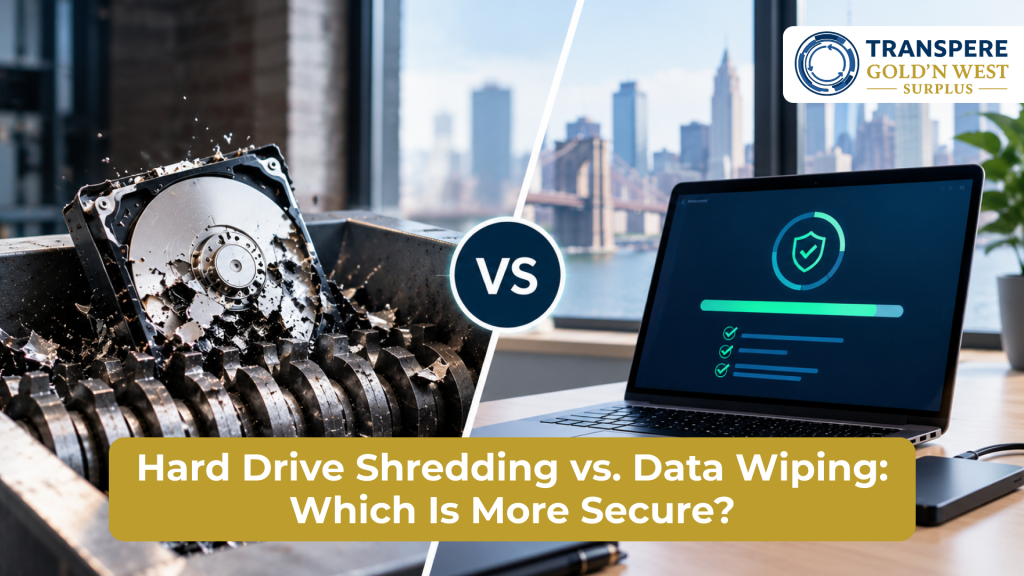
The answer depends on what you plan to do with the drive afterward and the level of security your organization requires. Hard drive shredding physically destroys the storage media, while data wiping uses an approved sanitization process to make the stored information inaccessible while potentially leaving the device usable.
Both can be appropriate when performed correctly. The right choice depends on the type of storage media, sensitivity of the information, organizational requirements, and whether the device needs to be reused.
What Is Hard Drive Shredding?
Hard drive shredding is a physical data destruction method that breaks a storage device into small pieces or particles, making the original drive unusable.
Instead of trying to remove individual files, shredding destroys the physical media that contains the information. This makes it particularly useful when an organization has no reason to reuse the drive or when physical destruction is required by its security procedures.
For businesses, shredding can provide a straightforward final-disposition method for retired hard drives, servers, and other storage media.
GWS Recycling provides data destruction services that include hard drive shredding and secure physical destruction, along with documentation such as Certificates of Destruction.
When is hard drive shredding a good choice?
Shredding can make sense when:
- The storage device is obsolete or damaged.
- The organization does not need to reuse the drive.
- The information is highly sensitive.
- Physical destruction is required by internal policy.
- A business is disposing of large quantities of drives.
- The organization wants the storage media permanently destroyed.
The main trade-off is simple: once a drive has been shredded, it cannot be reused as a functioning storage device.
What Is Data Wiping?
Data wiping is a logical data sanitization method designed to make previously stored information inaccessible without physically destroying the storage device.
Unlike simply deleting files, a proper sanitization process is intended to address the data stored on the media according to an organization’s security requirements.
NIST describes media sanitization as a process intended to make access to target data infeasible for a given level of effort. NIST SP 800-88 Rev. 2 also emphasizes establishing an organizational sanitization program and selecting appropriate methods based on information sensitivity and disposal or reuse requirements.
The important distinction is that deleting a file and securely sanitizing a drive are not the same thing.
A normal delete operation may remove references to files without providing the level of assurance required for secure disposal.
When is data wiping a good choice?
Data wiping may be appropriate when:
- The device will be reused.
- Equipment is being refurbished or remarketed.
- The organization wants to recover value from functioning equipment.
- The storage technology supports an appropriate sanitization method.
- The business has procedures for validating the sanitization result.
GWS specifically states that its data destruction services include NIST 800-88 compliant data wipes, alongside physical destruction.
Hard Drive Shredding vs. Data Wiping
The biggest difference comes down to physical destruction versus sanitization for potential reuse.
| Feature | Hard Drive Shredding | Data Wiping |
| Physical drive destroyed | Yes | No |
| Device can potentially be reused | No | Yes |
| Removes data logically | Not the primary purpose | Yes |
| Suitable for highly sensitive media | Often | Depends on approved method and verification |
| Supports equipment reuse | No | Yes |
| Creates physical destruction evidence | Yes | Documentation/verification required |
| Best for | Permanent disposal | Reuse or remarketing |
Neither method should automatically be considered “better” in every situation.
The more useful question is:
What level of protection does your organization require, and what happens to the device after sanitization?
Is Hard Drive Shredding More Secure Than Data Wiping?
If your only goal is permanently destroying the physical storage media, shredding provides a very direct solution because the original device is no longer intact.
However, that does not mean wiping is inherently insecure.
NIST’s current guidance recognizes multiple approaches to media sanitization and emphasizes selecting appropriate controls based on the sensitivity of the information and the intended disposition of the media.
A properly implemented and verified sanitization process can be appropriate when a business needs to reuse equipment.
For example, imagine a company replacing 500 working computers.
If every drive is shredded, the company eliminates the storage media but also loses the opportunity to reuse or remarket those drives.
If the organization’s approved sanitization process can securely sanitize the drives and verify the result, the equipment may continue through an appropriate reuse or value-recovery process.
On the other hand, if the drives contain particularly sensitive information and the organization requires physical destruction, shredding may be the more appropriate option.
What About SSDs?
This is an important consideration.
Modern businesses do not use only traditional magnetic hard disk drives. Solid-state drives (SSDs) and other flash-based storage devices are also common.
The sanitization method should therefore be selected based on the type of media rather than assuming that one process works identically for every device.
NIST’s guidance has evolved specifically to address modern storage technologies and organizational sanitization programs. The current SP 800-88 Rev. 2 focuses on selecting and managing appropriate sanitization methods rather than treating every storage device identically.
For organizations handling mixed equipment—including hard drives, SSDs, servers, storage arrays, RAID/SAN systems, and other media—professional data destruction can help ensure that the method matches the equipment and security requirements.
GWS’s bulk data destruction service lists hard drives, SSDs, backup tapes, servers and storage arrays, RAID/SAN systems, networking hardware, and proprietary/classified media among the equipment it handles.
When Should a Business Choose Shredding?
Hard drive shredding is generally worth considering when:
1. The device will never be reused
If the equipment is obsolete, damaged, or has reached the end of its useful life, physical destruction can provide a clear final-disposition route.
2. The information is highly sensitive
Organizations handling confidential government, financial, healthcare, or proprietary information may have stricter requirements for retired media.
3. Your internal policy requires physical destruction
Some organizations establish their own media-disposition policies that specify physical destruction for particular categories of information.
4. You are processing large quantities of retired drives
During data-center decommissioning, office technology refreshes, or large IT cleanouts, a professional bulk data destruction process can help maintain consistent handling and documentation.
When Should a Business Choose Data Wiping?
Data wiping can be a better fit when:
- The equipment is still functional.
- You want to reuse the device.
- You plan to remarket eligible equipment.
- Your organization has an approved sanitization procedure.
- The storage technology supports the selected method.
- Sanitization can be appropriately verified and documented.
This is particularly relevant to IT Asset Disposition (ITAD), where organizations may want to protect sensitive information while also recovering value from retired technology.
GWS offers ITAD services alongside data destruction and recycling, supporting a workflow that can combine secure data handling with value recovery.
A Real GWS Example: Handling Data Destruction at Scale
GWS’s published bulk data destruction process provides a practical example of how businesses can approach secure media disposal.
According to GWS, its process begins by reviewing and verifying devices scheduled for destruction. Drives and media are then shredded, wiped, or degaussed according to the organization’s requirements. The company provides Certificates of Destruction, serial reporting, and audit-ready compliance records before remaining materials move into its certified recycling process.
This illustrates an important point: secure data destruction does not have to be treated as an isolated step.
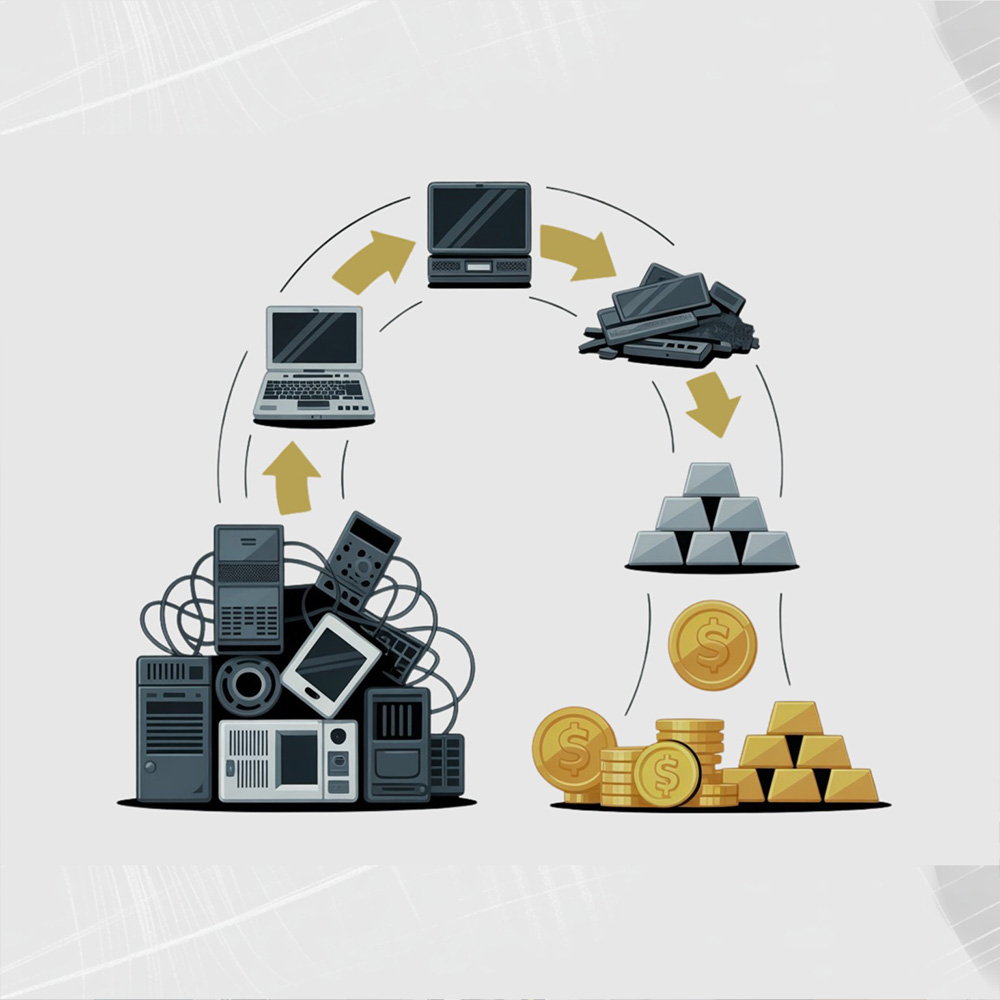
For a large IT refresh, a business can have its retired media identified, the appropriate destruction or sanitization method selected, documentation maintained, and remaining equipment directed into responsible recycling or value recovery.
That creates a more controlled process from retirement → data protection → documentation → recycling/value recovery.
How to Choose the Right Data Destruction Method
Before choosing shredding or wiping, ask these five questions:
1. How sensitive is the information?
Customer, financial, healthcare, government, or proprietary information may require stronger controls.
2. What type of storage media is involved?
HDDs, SSDs, tapes, and other media may require different approaches.
3. Will the equipment be reused?
If yes, physical destruction may defeat the purpose.
4. What does your organization’s policy require?
Security, compliance, contractual, and regulatory requirements should be considered.
5. Can the process be documented?
For business environments, documentation can be just as important as the physical or logical destruction itself.
Final Verdict: Shredding or Wiping?
Hard drive shredding is the stronger choice when permanent physical destruction is required. It eliminates the storage device itself and prevents the drive from being reused.
Data wiping is often the better choice when equipment needs to remain usable, provided the organization uses an appropriate sanitization method and verifies the result.
The key is not simply choosing the most destructive option. It is choosing a documented, appropriate sanitization or destruction process based on the sensitivity of the information, type of media, and final disposition of the equipment.
For organizations managing large quantities of retired equipment, professional secure data destruction can help bring together appropriate destruction methods, documentation, logistics, and responsible recycling.
GWS Recycling provides data destruction services including hard drive shredding, data wiping, degaussing, and bulk destruction, with documentation designed to support secure and auditable workflows.
FAQs
1. Is hard drive shredding more secure than data wiping?
Hard drive shredding physically destroys the storage media, so the original drive cannot be reused. Data wiping sanitizes the data while leaving the device potentially usable. The appropriate method depends on data sensitivity, media type, organizational requirements, and whether the device needs to be reused.
2. Can data wiping completely remove data from a hard drive?
A properly selected and implemented sanitization method is designed to make access to the target data infeasible according to the applicable security requirements. Simply deleting files or performing a basic factory reset should not automatically be treated as equivalent to a professionally managed media sanitization process.
3. Does NIST 800-88 require every hard drive to be shredded?
No. NIST SP 800-88 Rev. 2 does not simply require every drive to be physically destroyed. It provides guidance for establishing a media sanitization program and selecting appropriate methods based on information sensitivity and media disposition.
4. Is data wiping safe for SSDs?
SSDs use flash-based storage and should not automatically be treated like traditional hard disk drives. The sanitization approach should account for the specific storage technology and the organization’s security requirements. NIST’s current guidance addresses modern media sanitization as part of an organizational program.
5. What is the best data destruction method for a business?
There is no single method that is best for every business. Shredding is appropriate when permanent physical destruction is required, while data wiping can be suitable when equipment needs to be reused. Businesses should consider data sensitivity, media type, reuse plans, internal policies, and documentation requirements before selecting a method.