You have the boards. Maybe it is a few boxes pulled from old towers, maybe it is pallets of telecom gear from a decommissioning job. Either way, the boards themselves are only half the equation. Where you sell them determines how much of their metal value actually ends up in your pocket.
Two sellers with identical material can walk away with payouts that differ by 30 to 50 percent, purely based on who they sold to and how they prepared the load. This guide walks through every realistic option for selling scrap circuit boards, the pros and pitfalls of each, and the steps that consistently produce the biggest checks.
Know What You Are Selling First
Before you approach any buyer, understand that circuit boards are not one commodity. They are priced by grade, and the spread between grades is enormous. Low-grade TV and power supply boards might bring under a dollar per pound, while telecom boards, server boards, and vintage CPUs can pay many times that.
If you have not already, spend a few minutes sorting your material into rough categories: CPUs, RAM, high-grade boards, mid-grade motherboards, and low-grade mixed boards. Our full scrap circuit board price guide breaks down current 2026 value ranges for each grade, so you know what fair pricing looks like before anyone makes you an offer.
Walking in with sorted material and a ballpark understanding of value changes the entire conversation. Buyers quote sorted loads honestly because there is nothing to hide behind.
Your Options for Selling Scrap Circuit Boards
1. General Scrap Yards
The scrap yard down the street will usually take circuit boards, but boards are a sideline for them. Most yards lump everything into one or two mixed categories, pay accordingly, and then sell the material up the chain to an actual electronics processor.
That middle step costs you money. The yard has to build its margin into your price, which means you are effectively paying them to do what you could do yourself: get the boards to a real processor.
Scrap yards make sense only when you have a small amount of low-grade material and convenience matters more than payout.
2. Online Buyers and Mail-In Programs
Mail-in board buyers advertise attractive per-pound rates, and for sellers in remote areas they can be a workable option. But read the fine print. You typically pay shipping, wait for the load to be received and graded with no ability to watch the process, and accept whatever the final grading says. Disputes are difficult when your material is already in someone else’s warehouse two thousand miles away.
If you go this route, photograph everything before shipping, get the grading criteria in writing, and start with a small test load before sending anything valuable.
3. eBay and Direct-to-Hobbyist Sales
Vintage ceramic CPUs, rare boards, and collectible chips sometimes sell for more to collectors than to refiners. If you find gold-cap Intel 386 or 486 era processors in your pile, it is worth checking sold listings before scrapping them.
For everything else, selling boards piecemeal online is slow, fee-heavy, and rarely competitive with processor pricing once you account for your time.
4. Certified Electronics Processors (The Best Payout for Most Sellers)
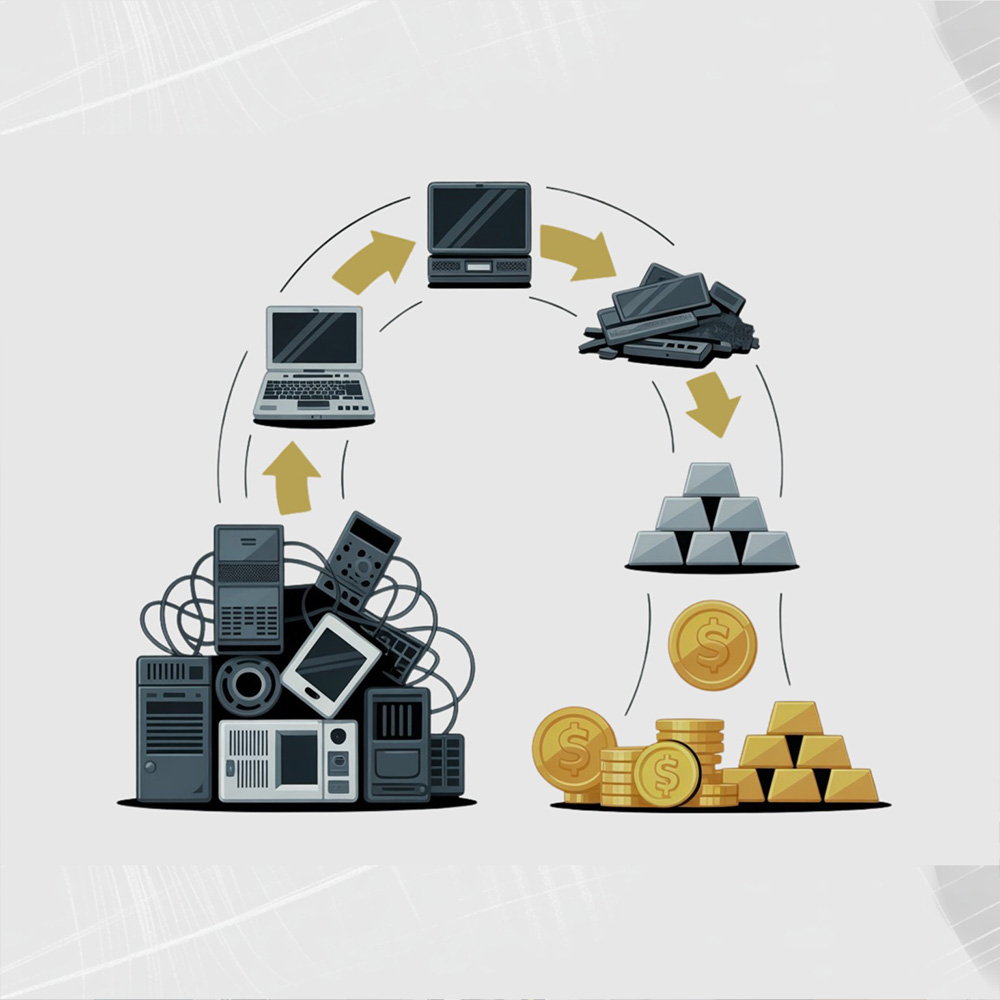
A dedicated electronics recycler with direct refining relationships sits closest to where the metal value is actually recovered, and that position is exactly why they pay the most. There is no chain of middlemen, no re-selling, and no margin stacking between you and the refinery.
This is the model we run at Gold’n West Surplus. Boards sold to us go straight into precious metal recovery, where gold, silver, palladium, and copper are extracted through our refining partnerships. Because the value flows directly back through us, we can grade your material category by category and pay competitive market rates on each one.
A certified processor also protects you in ways a scrap yard cannot. R2v3 certification means the facility is independently audited for responsible downstream handling, documented processes, and environmental compliance. Your boards are actually recycled, not exported or landfilled under someone else’s name.
What Separates a Good Buyer From a Bad One
Wherever you decide to sell, measure the buyer against this checklist:
- Transparent grading. They should tell you exactly which categories your load was sorted into and the rate paid on each. Vague lump-sum offers are a red flag.
- Current market pricing. Board values move with gold, palladium, and copper markets. A buyer quoting stale prices is keeping the difference.
- Certifications you can verify. R2v3 and ISO 14001 are the standards that matter in electronics recycling.
- Fast, documented payment. Reputable buyers pay on the spot or on a stated schedule, with paperwork to match.
- No bait-and-switch quoting. The quote you receive from photos or a material list should hold up when the load arrives, assuming the material matches what you described.
How to Sell to GWS: Three Simple Steps
Selling your boards to Gold’n West Surplus works the same way whether you are an individual with a few boxes or a scrap dealer moving pallets every month.
Step 1: Request a quote. Send a quick list or photos of your boards and components through our contact page. We respond with transparent pricing based on the current metals market, usually the same day.
Step 2: Drop off or schedule a pickup. Local sellers can bring material to our Corona facility through our local drop-off service during business hours, no appointment needed. Businesses, schools, and dealers with volume can schedule a pickup and our in-house logistics team handles the rest.
Step 3: Get paid fast. Once your material is verified, payment is issued on the spot for most loads, or within three business days for larger shipments.
If sorting is not worth your time, mixed loads are welcome too. Our e-waste recycling by the pound program prices unsorted material by weight, which is the simplest path when you just want the pile gone and a check in hand.
Selling Boards From Business Equipment? Protect Your Data First
If your boards are coming out of servers, office computers, or networking equipment, remember that storage devices may still hold recoverable company data. Before any equipment leaves your control, drives should be wiped or physically destroyed to a recognized standard.
GWS pairs every business buyback with optional certified data destruction, including NIST 800-88 compliant wiping and physical shredding with Certificates of Destruction. You capture the metal value and close the security loop in one transaction.
The Bottom Line
The best place to sell scrap circuit boards is the buyer closest to the refining process: a certified electronics processor that grades transparently, pays on current market rates, and documents everything. Skip the middlemen, sort what you can, and get a real quote before you commit your material.