Technology plays a critical role in modern businesses. From desktop computers and servers to printers, networking devices, and mobile phones, organizations rely on electronic equipment to complete daily operations efficiently. However, every electronic device eventually reaches the end of its useful life. When that happens, businesses must decide how to dispose of these assets responsibly.
Unfortunately, many companies still make the mistake of throwing outdated electronics into regular trash bins or dumpsters. While this may seem like a quick solution, it can create serious environmental, legal, and data security risks. Electronic devices often contain hazardous substances such as lead, mercury, cadmium, and lithium, which can contaminate soil and groundwater if they end up in landfills. At the same time, many devices store confidential business information that could be recovered if they are not properly destroyed before disposal.
For companies operating in California, responsible business e-waste disposal California is more than just a sustainability initiative,it is a compliance requirement. California has some of the nation’s most comprehensive environmental regulations governing electronic waste, making it essential for businesses to understand what qualifies as e-waste and how it should be managed.
This guide explains what is considered e-waste, discusses the top 10 hazardous e-waste items businesses should never throw in the trash, and outlines why following electronics disposal laws CA helps protect your business, your customers, and the environment.
What Is Considered E-Waste?
Electronic waste, commonly known as e-waste, refers to any electronic or electrical equipment that is no longer wanted, no longer functions properly, or has become obsolete due to technological upgrades. Businesses generate e-waste more frequently than many realize because technology changes rapidly. New software requirements, hardware upgrades, and office expansions often result in large quantities of outdated equipment.
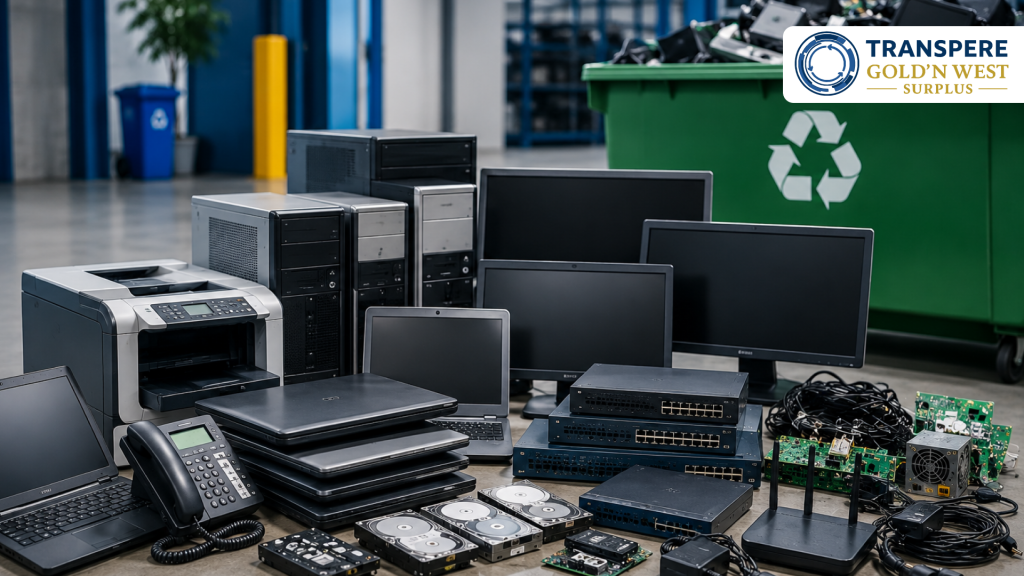
Business e-waste can include:
- Desktop computers
- Laptops
- Servers
- Hard drives and SSDs
- Monitors
- Mobile phones
- Tablets
- Printers and copiers
- Networking equipment
- Circuit boards
- Batteries
- Chargers
- Power supplies
- Cables and adapters
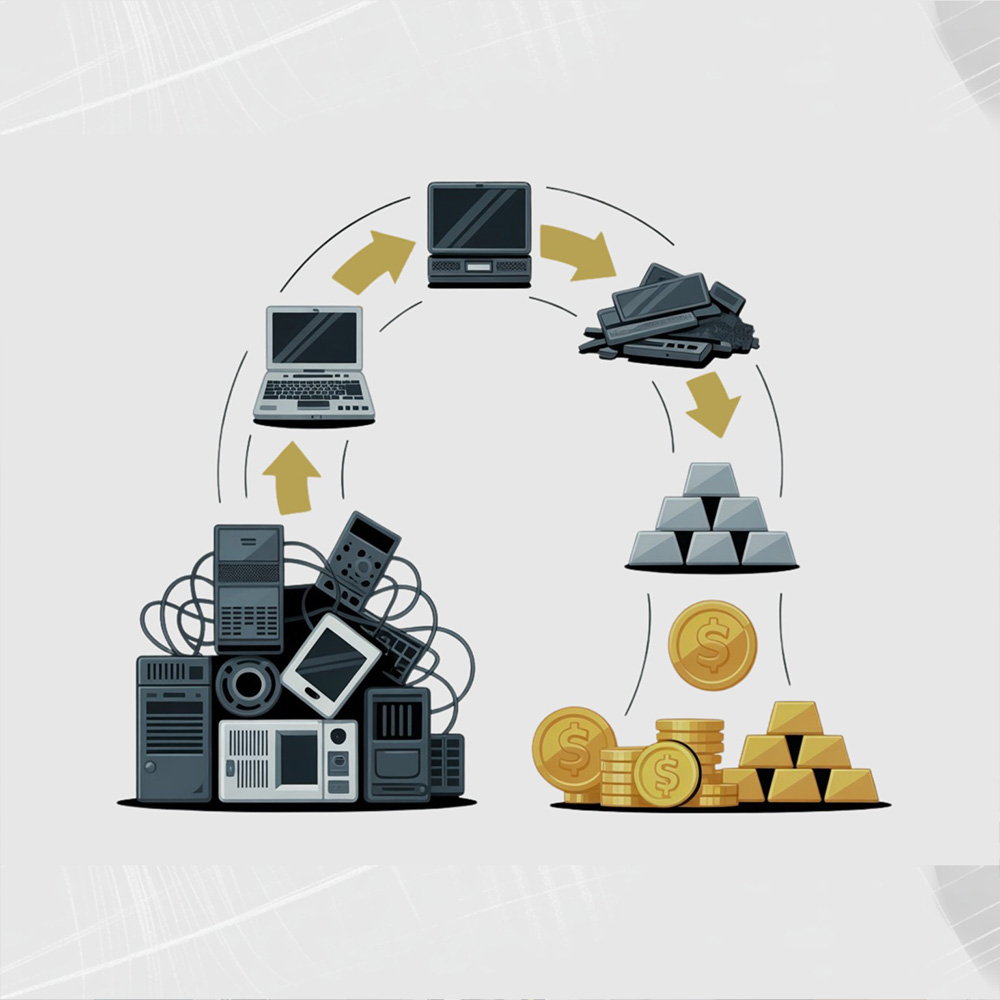
Many of these devices contain valuable raw materials such as aluminum, copper, steel, gold, silver, and palladium. Recovering these materials through responsible recycling reduces the need for mining and supports a more sustainable circular economy.
At the same time, electronic devices may also contain hazardous substances that require specialized handling. Improper disposal can release toxic materials into the environment, creating long-term health and environmental concerns. This is why businesses should always follow established e-waste regulations when disposing of electronic equipment.
Why Proper Business E-Waste Disposal Matters in California
California has established strict environmental regulations to reduce landfill waste and encourage responsible recycling practices. Businesses that ignore these regulations may face unnecessary compliance risks while also harming the environment.
Proper business e-waste disposal California provides several important benefits:
Protects Sensitive Business Information
Old computers, hard drives, servers, and mobile devices often contain confidential customer records, financial information, employee files, intellectual property, and login credentials. Simply deleting files is rarely enough to eliminate recoverable data. Secure data destruction should always be part of the disposal process.
Supports Environmental Sustainability
Electronic waste contains materials that can be safely recovered and reused in manufacturing new products. Recycling conserves natural resources, reduces energy consumption, and keeps hazardous materials out of landfills.
Helps Maintain Regulatory Compliance
California’s electronics disposal laws CA require many electronic products to be managed responsibly rather than discarded with general waste. Working with a qualified electronics recycling provider helps businesses stay compliant with these regulations.
Demonstrates Corporate Responsibility
Customers, investors, and business partners increasingly value organizations that prioritize sustainability. Proper electronics recycling reflects a commitment to environmental stewardship and responsible business practices.
Top 10 Types of E-Waste Businesses Should Never Throw in the Trash
1. Desktop Computers and Laptops
Desktop computers and laptops are among the most common electronic assets found in every workplace. Whether your company replaces systems every three years or only upgrades when necessary, outdated computers should never be thrown into ordinary trash containers.
Computers contain numerous recyclable components, including aluminum, copper, steel, plastics, and precious metals found on internal circuit boards. Recovering these materials helps reduce the demand for newly mined resources while supporting sustainable manufacturing.
Beyond their recyclable value, computers also present significant data security concerns. Even if files have been deleted, hard drives may still contain recoverable information such as financial reports, customer databases, payroll records, contracts, emails, and confidential company documents.
Businesses should always ensure computers undergo secure data destruction before recycling. Partnering with a professional electronics recycling company helps ensure equipment is processed safely while protecting sensitive information.
Proper disposal of computers is one of the most important aspects of business e-waste disposal California, especially for organizations that regularly upgrade office technology.
2. Hard Drives, SSDs, and Data Storage Devices
Storage devices deserve special attention because they are often the greatest source of data security risk.
These include:
- Internal hard drives
- External hard drives
- Solid State Drives (SSDs)
- USB flash drives
- Backup tapes
- Memory cards
Many businesses mistakenly believe formatting a hard drive permanently removes information. In reality, specialized software can often recover deleted files if the drive has not been physically destroyed or professionally sanitized.
Sensitive information commonly stored on business drives includes:
- Employee records
- Tax documents
- Banking information
- Client contracts
- Customer databases
- Passwords
- Intellectual property
- Medical records
- Legal documents
For this reason, organizations should include certified data destruction as part of every electronics disposal project. Proper destruction significantly reduces the risk of data breaches while supporting regulatory compliance.
Responsible recycling providers can safely process storage devices after data has been securely destroyed, allowing valuable materials to be recovered instead of wasted.
3. Servers and Data Center Equipment
As businesses grow, their technology infrastructure evolves. Older servers are often replaced with faster systems, cloud-based solutions, or more energy-efficient equipment. Although retired servers may no longer be useful to the organization, they should never be discarded in dumpsters.
Servers often contain:
- High-capacity storage drives
- Valuable processors
- Memory modules
- Power supplies
- Networking components
- Precious metals
More importantly, servers frequently store years of confidential business information. Customer records, accounting systems, email archives, employee information, and proprietary applications may all reside on these systems.
Before recycling servers, businesses should verify that all storage devices have undergone secure destruction or certified data sanitization. This protects sensitive information while allowing recyclable materials to be recovered responsibly.
Organizations that perform regular IT upgrades should include server recycling as part of their long-term asset management strategy.
4. Computer Monitors (LCD, LED, and CRT Displays)
Monitors are another category of electronic waste that businesses should never throw into general trash bins. Whether your office is replacing aging LCD screens or upgrading to larger, high-resolution displays, proper recycling is essential.
Older CRT monitors may contain leaded glass, while some flat-panel displays include mercury-containing backlights and other components that require careful handling. These materials can pose environmental risks if they end up in landfills.
Modern LCD and LED monitors also contain recyclable plastics, aluminum frames, copper wiring, and electronic circuit boards. Through responsible recycling, many of these materials can be recovered and reused in new manufacturing processes.
Businesses should also remember that some monitors are connected to computers containing sensitive business information. Although the monitor itself typically does not store data, recycling projects should ensure all connected devices are properly managed as part of the overall electronics disposal process.
5. Printers, Copiers, and Multifunction Office Equipment
Office printers and copiers are often overlooked during electronic recycling projects. Many businesses assume these machines are simply large office appliances, but they actually contain numerous electronic components that require responsible disposal.
Modern multifunction printers often include:
- Internal hard drives
- Memory storage
- Circuit boards
- Toner systems
- Power supplies
- Electronic sensors
Some business printers temporarily store copies of scanned documents, making secure disposal particularly important for organizations handling sensitive information.
These machines are also made from recyclable metals and plastics that can be recovered through professional recycling programs instead of being sent to landfills.
Replacing office printing equipment provides an excellent opportunity to implement responsible electronics recycling for businesses while reducing environmental impact and protecting confidential information.
6. Mobile Phones and Tablets
Smartphones and tablets have become essential business tools for communication, remote work, inventory management, customer service, and field operations. As companies upgrade to newer devices, older phones and tablets often end up sitting in storage drawers or, worse, are mistakenly discarded with regular office waste.
These devices may appear small, but they contain valuable recyclable materials such as aluminum, copper, cobalt, lithium, gold, silver, and rare earth elements. Recovering these resources through responsible recycling helps conserve natural materials and reduces the environmental impact of mining.
From a business perspective, the biggest concern is data security. Even after a factory reset, mobile devices may still contain recoverable information if they are not professionally sanitized. Business smartphones and tablets often store:
- Company emails
- Customer contact lists
- Business applications
- Banking information
- Authentication tokens
- Cloud storage access
- Employee communications
- GPS location history
- Corporate documents
Improper disposal of these devices could expose confidential information to unauthorized individuals.
Businesses should establish a formal mobile device retirement process that includes data wiping or physical destruction before recycling. Working with an experienced electronics recycling provider ensures devices are handled securely while supporting business e-waste disposal California requirements.
7. Networking Equipment
Every business relies on networking equipment to keep employees connected. As technology evolves, routers, switches, wireless access points, firewalls, modems, and network storage devices are frequently upgraded to improve speed, reliability, and cybersecurity.
Although these devices may seem harmless, they often contain sensitive configuration information, including:
- Network passwords
- VPN settings
- IP address configurations
- Firewall rules
- Security certificates
- User credentials
If discarded improperly, this information could potentially be accessed by unauthorized individuals.
Networking equipment also contains recyclable circuit boards, copper wiring, aluminum heat sinks, and other valuable materials that should be recovered instead of ending up in landfills.
Businesses should include networking hardware in every IT asset disposal plan. Secure processing helps protect company infrastructure while ensuring compliance with electronics disposal laws CA.
Organizations that regularly expand offices, relocate facilities, or upgrade their network infrastructure should schedule routine electronic recycling projects to prevent obsolete networking equipment from accumulating in storage rooms.
8. Batteries and Uninterruptible Power Supply (UPS) Systems
Among all hazardous e-waste items, batteries are some of the most dangerous when disposed of incorrectly.
Businesses commonly generate battery waste from:
- Laptop batteries
- Smartphone batteries
- Tablet batteries
- UPS backup systems
- Rechargeable power tools
- Wireless equipment
- Emergency lighting systems
Many batteries contain lithium, lead, nickel, cadmium, or other hazardous materials that require specialized handling.
Improper disposal can create several risks, including:
- Fire hazards
- Chemical leaks
- Soil contamination
- Water pollution
- Workplace safety issues
Lithium-ion batteries, in particular, have become a growing concern because damaged batteries can ignite when compressed inside garbage trucks or waste processing facilities.
California encourages proper battery recycling through approved collection and recycling programs. Businesses should never place batteries in standard office trash bins.
Instead, batteries should be collected separately and delivered to qualified electronics recycling providers that understand applicable e-waste regulations and environmental handling procedures.
9. Circuit Boards and Electronic Components
Many businesses generate electronic components without realizing they qualify as e-waste.
Examples include:
- Motherboards
- Graphics cards
- Processors
- RAM modules
- Expansion cards
- Industrial control boards
- Manufacturing electronics
- Communication boards
Circuit boards are among the most valuable electronic components because they contain recoverable precious metals, including:
- Gold
- Silver
- Palladium
- Copper
Recovering these materials helps reduce mining demand while supporting sustainable manufacturing practices.
However, circuit boards may also contain hazardous substances that require specialized processing. Throwing them into regular trash not only wastes valuable resources but may also contribute to environmental contamination.
Manufacturers, IT departments, repair facilities, healthcare organizations, educational institutions, and government agencies should all include circuit board recycling as part of their electronics disposal strategy.
Responsible recycling supports both environmental protection and California’s broader sustainability goals.
10. Power Supplies, Chargers, Cables, and Electronic Accessories
One of the most overlooked categories of e-waste is electronic accessories.
Although individual cables or chargers may seem insignificant, businesses often accumulate hundreds—or even thousands—of these items over time.
Common examples include:
- Power adapters
- Laptop chargers
- USB cables
- HDMI cables
- Ethernet cables
- Extension cords
- Docking stations
- Power supplies
- Surge protectors
These accessories contain recyclable materials such as copper, aluminum, steel, and plastics that can be recovered instead of discarded.
Large office relocations, technology refresh projects, and warehouse cleanouts often uncover significant quantities of obsolete electronic accessories.
Rather than sending these materials to landfills, businesses should include them in electronics recycling collections. Proper recycling supports resource conservation while helping organizations meet sustainability objectives.
Even small electronic accessories contribute to responsible electronics recycling for businesses when recycled correctly.
A Real-World Example from Gold’n West Surplus
A Southern California company recently upgraded its office technology by replacing aging desktop computers, monitors, laptops, networking equipment, and several servers. Like many businesses, the organization initially considered disposing of the old equipment through general waste removal because it seemed faster and more convenient.
Instead, the company partnered with Gold’n West Surplus to manage the retirement of its IT assets.
The project began with an inventory of all electronic equipment scheduled for disposal. Devices containing sensitive information—including desktop computers, laptops, servers, and hard drives—were identified and processed using secure data destruction procedures before recycling.
Once data-bearing devices were properly handled, the remaining equipment was sorted by material type. Reusable components were separated for potential refurbishment where appropriate, while end-of-life electronics were directed to responsible recycling processes. Valuable materials such as copper, aluminum, steel, and circuit board components were recovered, helping reduce landfill waste and conserve natural resources.
By choosing a professional electronics recycling partner, the business was able to improve its environmental performance, protect confidential information, and support responsible business e-waste disposal California practices. The project also simplified internal asset management by ensuring outdated equipment was removed safely and efficiently.
Best Practices for Business E-Waste Disposal
Creating an effective electronics disposal program helps businesses remain compliant while reducing operational risks. Consider adopting the following best practices:
Maintain an Accurate Asset Inventory
Keep detailed records of computers, servers, mobile devices, networking equipment, and other electronic assets throughout their lifecycle. A well-maintained inventory makes it easier to track equipment scheduled for replacement or disposal.
Protect Sensitive Data Before Disposal
Before recycling any device that stores information, ensure all data is securely erased or physically destroyed using recognized data destruction methods. This reduces the risk of data breaches and helps protect confidential business information.
Separate Electronic Waste from General Trash
Designate specific collection areas for obsolete electronics rather than mixing them with regular office waste. Proper segregation prevents accidental disposal and simplifies recycling.
Schedule Regular Recycling Events
Instead of allowing unused electronics to accumulate, establish a recurring recycling schedule. Regular collections improve workplace organization and reduce storage requirements.
Partner with an Experienced Electronics Recycler
Choose a trusted recycling company that understands California regulations, follows environmentally responsible practices, and provides secure handling for electronic assets.
Common Mistakes Businesses Should Avoid
Even organizations with good intentions sometimes make mistakes when disposing of electronic equipment. Avoid these common issues:
- Throwing electronic devices into regular dumpsters
- Forgetting to erase confidential data
- Storing obsolete electronics for years without a disposal plan
- Mixing batteries with general office waste
- Disposing of networking equipment without removing sensitive configurations
- Ignoring California recycling regulations
- Choosing disposal methods based solely on convenience instead of compliance
Avoiding these mistakes helps protect your business while supporting responsible environmental stewardship.
Final Thoughts
As technology continues to evolve, businesses will generate increasing amounts of electronic waste. Managing these assets responsibly is no longer optional—it is an essential part of protecting sensitive information, meeting environmental responsibilities, and complying with California regulations.
Understanding what is considered e-waste, recognizing hazardous e-waste items, and following electronics disposal laws CA can help businesses make informed decisions when retiring outdated equipment. From desktop computers and servers to batteries, networking hardware, and electronic accessories, every device should be handled through responsible recycling rather than placed in the trash.
Implementing a structured business e-waste disposal California strategy not only reduces environmental impact but also supports data security, operational efficiency, and long-term sustainability goals. By partnering with an experienced electronics recycling provider like Gold’n West Surplus, businesses can simplify the disposal process while ensuring valuable materials are recovered and electronic waste is managed responsibly.
Whether you’re replacing a handful of office computers or completing a company-wide IT refresh, making responsible recycling part of your asset management strategy is an investment in both your business and the environment.
Frequently Asked Questions (FAQs)
1. What is considered e-waste for businesses?
Business e-waste includes computers, laptops, servers, monitors, printers, hard drives, mobile phones, networking equipment, batteries, cables, and other electronic devices that are no longer needed or functional.
2. Why is business e-waste disposal important in California?
Proper business e-waste disposal California helps businesses comply with environmental regulations, protect sensitive information, reduce landfill waste, and recover valuable recyclable materials.
3. Can businesses throw old computers in regular trash bins?
No. Computers contain hazardous materials and valuable recyclable components. They should be processed through a qualified electronics recycling provider rather than disposed of with general waste.
4. Which electronic devices require secure data destruction?
Devices that store information—including computers, laptops, hard drives, SSDs, servers, smartphones, tablets, and some multifunction printers—should undergo secure data destruction before recycling.
5. How can businesses create a compliant e-waste disposal program?
Businesses should maintain an asset inventory, separate e-waste from regular trash, securely destroy data, schedule regular recycling events, and work with a trusted electronics recycling company that understands California compliance requirements.