What You Need To Know
- An average desktop computer holds about 0.2 grams of gold. A laptop holds about 0.1 grams.
- At roughly $4,007 per troy ounce (October 26, 2026), that is about $26 of gold in a desktop and $13 in a laptop.
- The gold sits in thin plating on the CPU, RAM contacts, motherboard, and expansion card connectors.
- A metric ton of circuit boards can hold 80 to 1,500 grams of gold, far richer than mined ore.
- One computer is not worth refining at home. Value shows up when boards are sorted, aggregated, and sold to a specialist that assays them.
Short answer: an average desktop computer contains about one fifth of a gram of gold, worth roughly $26 at late October 2026 spot prices. A laptop contains about a tenth of a gram, or about $13. That is the metal inside, not what a buyer pays, since recovery costs come out first.
So how much gold is in a computer, really? Less than most people hope. I’ll be straight with you: if you are picturing a gold bar hiding in your old tower, you will be disappointed. But the question gets far more interesting once you stop counting one machine and start counting a pallet of them.
Here’s my honest opinion up front. For a single home computer, the data on the hard drive matters more than the gold on the board. For a business retiring fifty or five hundred machines, the gold content becomes a real line item. This guide covers both.
How much gold is in a computer, a laptop, and a phone?
A desktop computer contains about 0.2 grams of gold, a laptop about 0.1 grams, and a smartphone about 0.034 grams.
Those are the widely cited estimates from SD Bullion’s research on gold in computers.
SD Bullion attributes the phone figure to the U.S. Geological Survey.
To put a dollar value on it, I used the live spot price SD Bullion displayed on October 26, 2026: $4,006.88 per troy ounce.
A troy ounce is 31.1 grams, so one gram of pure gold is worth about $128.82 right now.
| Device | Estimated gold content | Contained gold value (Oct 26, 2026) |
|---|---|---|
| Desktop computer | about 0.2 g | about $26 |
| Laptop computer | about 0.1 g | about $13 |
| Smartphone | about 0.034 g | about $4.40 |
| 1 metric ton of circuit boards | 80 to 1,500 g | about $10,300 to $193,000 |
Notice the word “contained.” That column is the value of the gold metal sitting inside the device. It is not a payout. Think of it like the crude oil inside a barrel versus the price of gasoline at the pump: refining, transport, and processing all happen in between, and someone pays for each step.
Gold prices also move daily. If you are reading this month from now, multiply the grams by the current price per gram to update the math.
Where is the gold inside a computer?
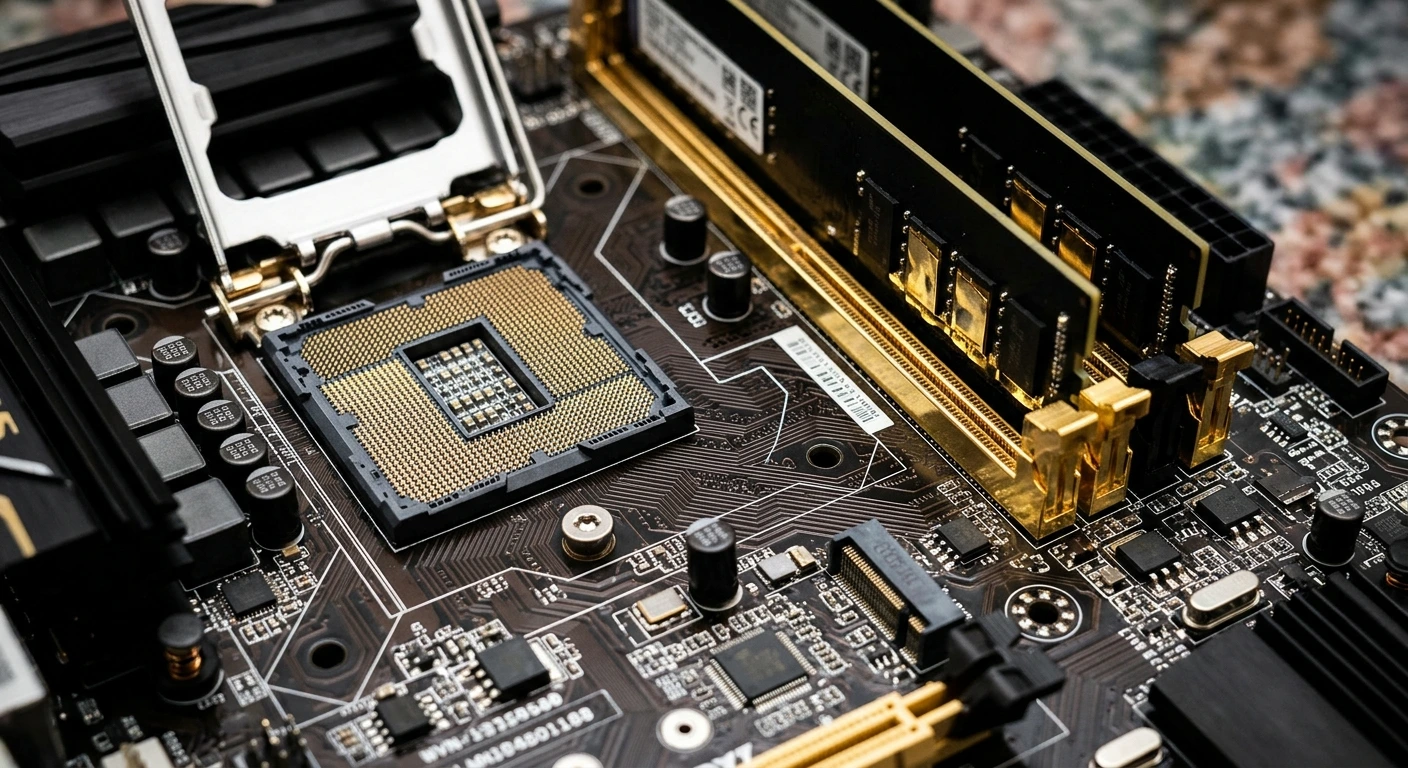
The gold in a computer lives almost entirely on its circuit boards and the parts that plug into them. Gold plating (a microscopically thin layer of gold bonded over a cheaper base metal) coats the contact points where electricity has to pass cleanly between two parts.
Picture the gold leaf on an old picture frame. It looks solid, but scrape it and you find wood underneath. Computer gold works the same way, which is why the shine fools people into overestimating the weight.
Here is where to look:
- CPU (central processing unit): the processor’s pins or contact pads are gold plated, and older ceramic processors tend to carry the most.
- RAM modules: the gold strip along the bottom edge, called gold fingers, is the contact that slides into the memory slot.
- Motherboard: gold appears on slot contacts, connectors, and inside the integrated circuit chips as fine bonding wire.
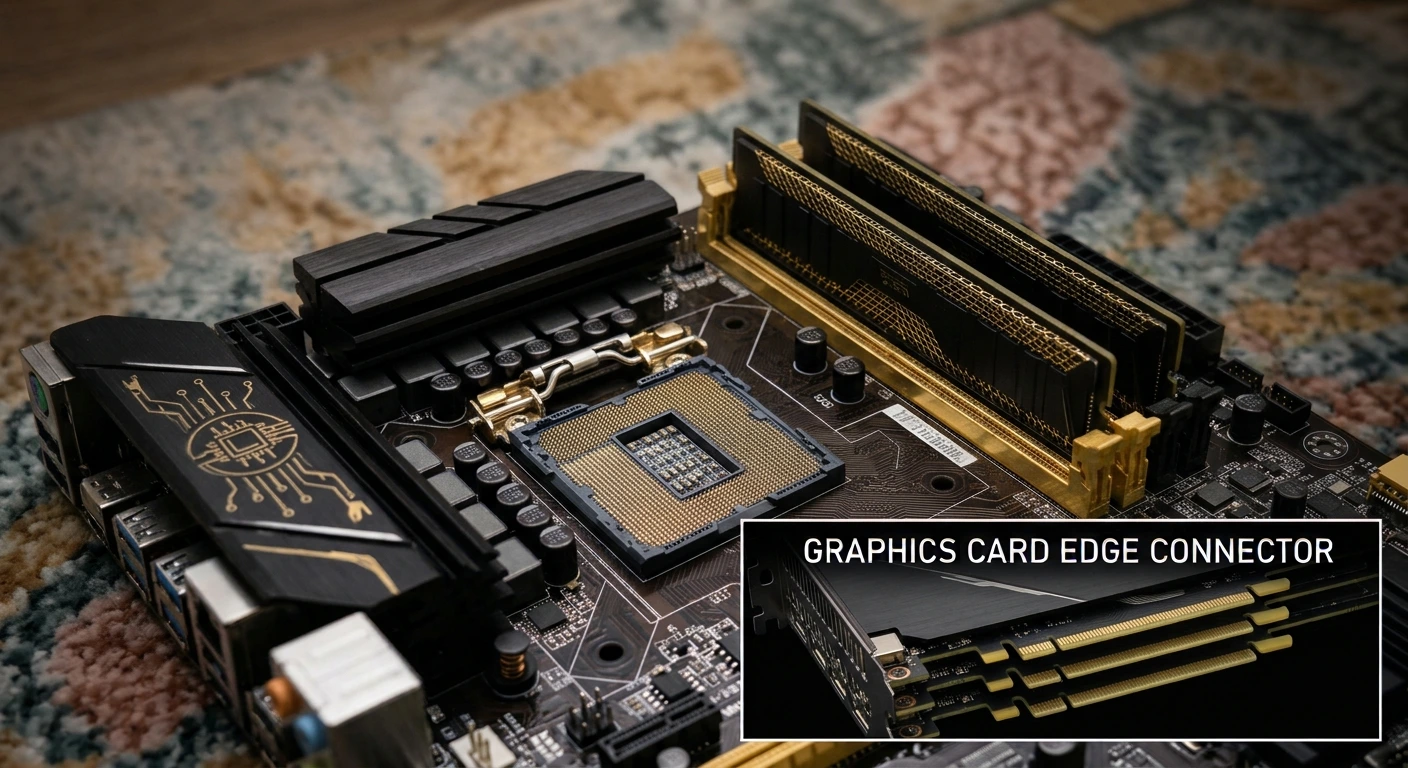
- Expansion cards: graphics cards, network cards, and sound cards all have gold fingers on their edge connectors.
- Drive boards: the small circuit board on a hard drive carries gold contacts, though the drive itself is the bigger concern for data security.
Older machines often hold more. Equipment built in the 1990s generally used thicker plating, which is why vintage boards and processors sit higher on buyer price sheets than modern ones.
Why do computers use gold at all?
Computers use gold because it conducts electricity well and does not corrode. Silver and copper conduct slightly better, but both tarnish when exposed to air, and tarnish on a contact point interrupts the tiny, low-voltage signals that modern chips depend on.
A corroded contact behaves like a smudge on a pair of glasses. Everything still technically works, but the signal gets fuzzy and errors creep in. Gold stays clean for decades, so manufacturers spend a few cents of precious metal to avoid warranty returns.
Why is a ton of circuit boards richer than gold ore?
A metric ton of computer circuit boards can contain between 80 and 1,500 grams of gold.
That figure comes from the USGS fact sheet on obsolete computers.
The same USGS paper puts that at 40 to 800 times the gold concentration of ore mined in the United States.
That comparison is the entire economic engine of urban mining (recovering metals from discarded products instead of from the ground). A mine has to blast and crush tons of rock to collect a few grams. A recycler starts with material where the gold is already concentrated in a known location.
The volume is enormous, too. The UN’s Global E-waste Monitor 2024 found the world generated 62 million tonnes of e-waste in 2022.
Only 22.3% of it was documented as properly collected and recycled. The Global E-waste Monitor valued the gold embedded in that year’s e-waste at $15 billion.
There’s a catch the USGS points out plainly: gold in an obsolete computer has little value until it is collected, concentrated, and refined. In other words, scattered gold is like scattered pennies. It only adds up once someone gathers it in one place.
Can you extract gold from a computer yourself?
You can, technically, but I would not, and I don’t think you should either. The gold in one desktop is worth about $26 at today’s price, while home extraction requires acids, heat, and a way to dispose of toxic leftovers legally.
The World Health Organization’s e-waste fact sheet lists what informal recovery looks like: acid baths, open burning, and heating of boards.
The World Health Organization says these practices can release up to 1,000 chemical substances, including lead and mercury, into air, soil, and water.
There’s also the legal side. In California, the Department of Toxic Substances Control classifies e-waste as universal waste, a category of hazardous waste.
That means computers and anything with a circuit board cannot go in the household trash, and businesses handling them must follow specific rules.
The math simply doesn’t favor DIY. You would spend more on safety gear and chemicals than you would recover from a dozen machines.
How do you recover the value of an old computer?
Recover the value of an old computer by protecting your data first, then separating the high-value parts, and selling to a recycler that grades and assays material. Here is the order I recommend:
- Deal with the data. Wipe or physically destroy every hard drive and SSD before anything else. A business should get a certificate of destruction through a certified data destruction service.
- Check reuse value. A working laptop under five years old is usually worth more resold than scrapped. Gold content is the floor, not the ceiling.
- Pull the CPU and RAM. These carry the densest gold per pound and are priced separately from the motherboard.
- Remove batteries. Coin cells on motherboards and laptop batteries are a contamination problem, and buyers dock or reject loads that include them.
- Sort boards by grade. Mixing rich boards with power supply boards drags the whole load down to the lowest price. My breakdown of high grade vs. low grade circuit boards shows how to tell them apart.
- Sell to a specialist, not a general scrap yard. A specialist recycler assays the material (tests a sample to measure its actual metal content) and pays against current metal markets.
For per-pound numbers on each board type, see the 2026 scrap circuit board price guide. I kept detailed pricing there so this guide can stay focused on what’s inside the machine.
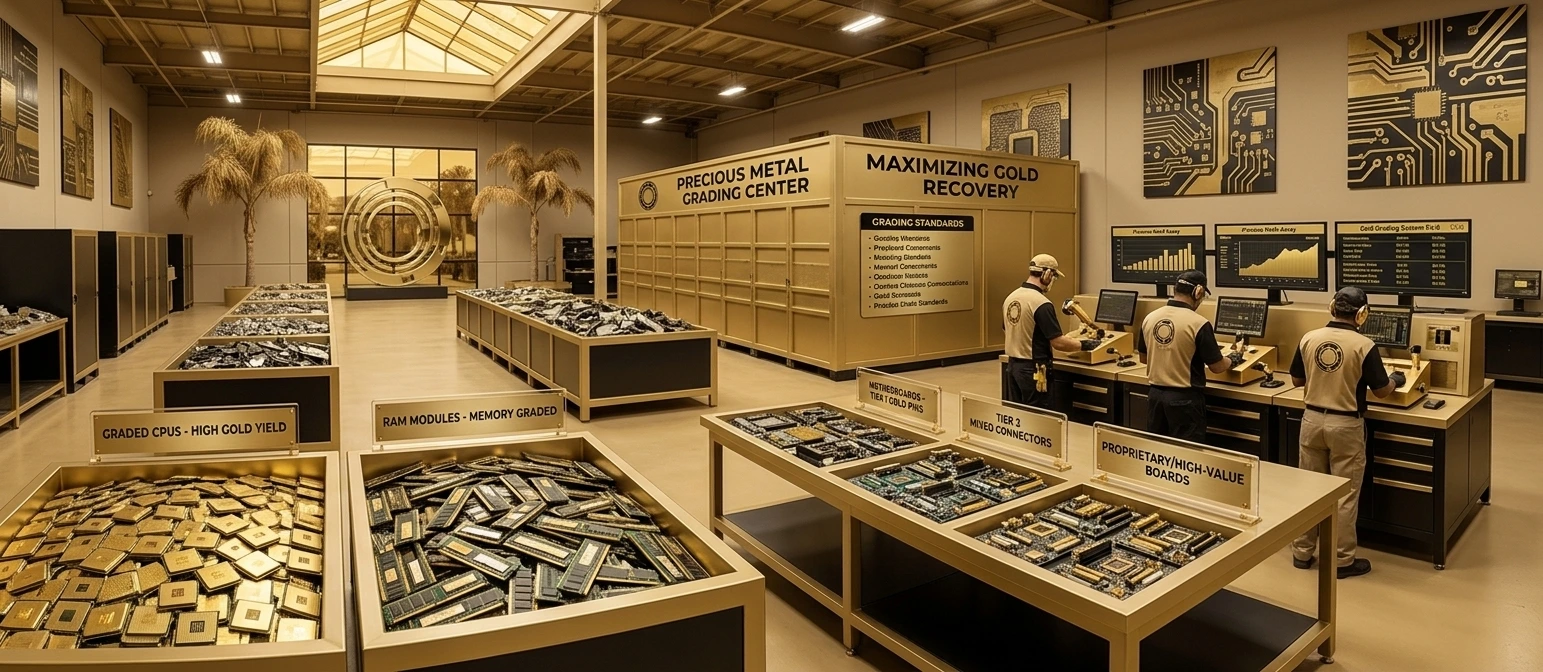
Retiring computers in bulk? Gold’n West Surplus has been buying and recycling electronics in Corona, California since 1993, with R2v3, ISO 14001, and ISO 45001 certified processing. Send a list or photo for a quote through the precious metal recovery program, or call (951) 371-2020.
Which recovery route fits your situation?
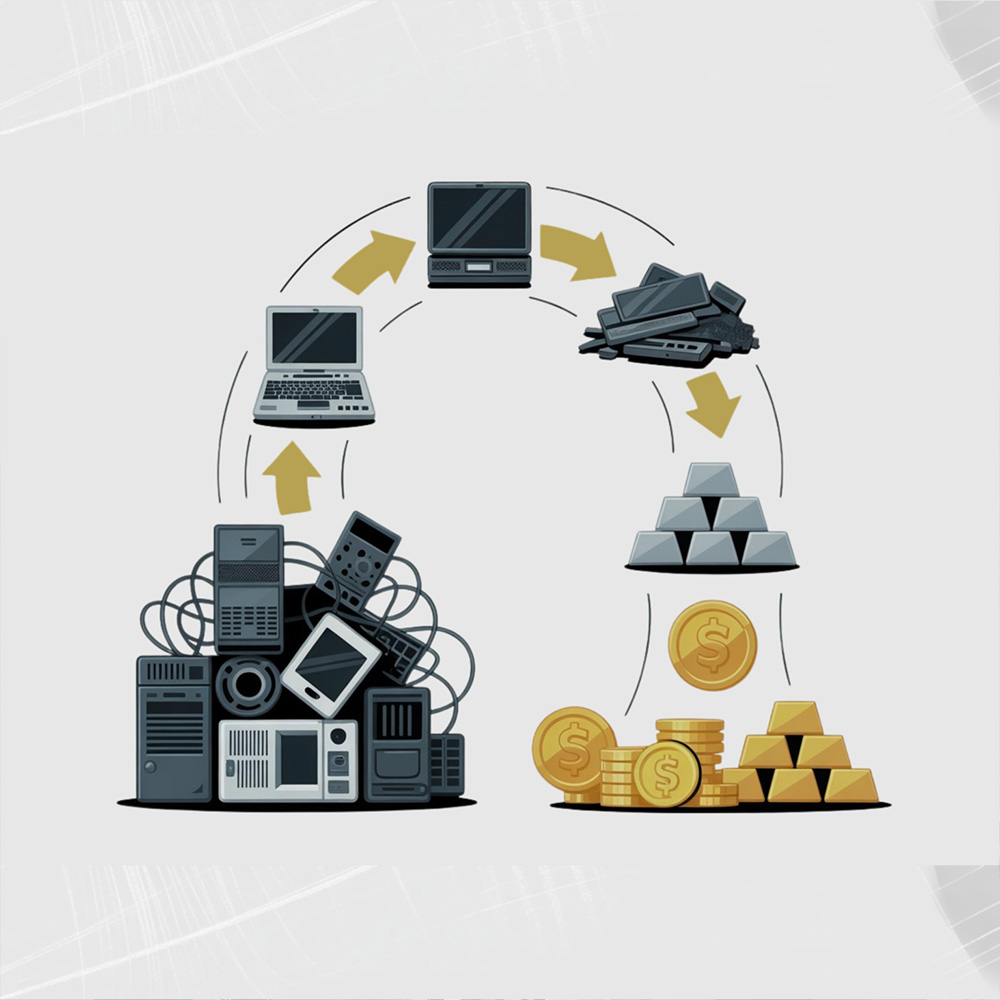
The right route depends on volume. One computer and one thousand computers are different problems, and the best option changes with scale.
| Your situation | Best route | Why |
|---|---|---|
| One or two home computers | Local drop-off recycling | Legal disposal, data handled, no disassembly needed |
| A box of loose boards or parts | E-waste recycling by the pound | Paid on weight and grade without a large minimum |
| Small business with 20 to 100 machines | Scheduled business pickup | Data destruction plus metal value on the boards |
| Corporate IT refresh or data center | Full IT asset disposition | Resale value, compliance records, and metal recovery together |
| Scrap collector with sorted boards | Direct sale to a board buyer | Graded material earns the top of the price range |
If you are planning a larger refresh, the complete ITAD guide for California businesses walks through how resale, data security, and recycling fit together.
One honest limitation: for a single household computer, you should not expect a check worth writing home about. The real win there is safe, legal disposal and peace of mind about your data. The gold becomes meaningful at business volume.
Frequently asked questions
How much gold is in a laptop?
The gold in a laptop comes to about a tenth of a gram, roughly half of a desktop, according to SD Bullion. At the October 26, 2026 spot price of about $4,007 per ounce, that is around $13 of contained gold.
Laptops have smaller boards and fewer expansion cards, so there is less plated surface. Most of it sits on the motherboard, CPU, and memory contacts.
How many computers does it take to get one ounce of gold?
It takes roughly 155 desktop computers to contain one troy ounce of gold. Divide the 31.1 grams in a troy ounce by about a fifth of a gram per desktop and you land near 155 machines.
Real recovery yields run below the contained amount, so a refiner would need more units in practice. That is why gold recovery only works in bulk.
Do old computers have more gold than new ones?
Generally, yes. Computers from the 1990s and early 2000s tend to have thicker gold plating, larger boards, and ceramic processors, all of which add gold content. Manufacturers have thinned plating over time to cut costs. That is why vintage motherboards and older CPUs usually sit higher on buyer price lists than boards pulled from a recent office laptop.
How much gold is in a CPU?
The gold in a single CPU varies widely by age and design. Older ceramic processors with gold plated pins carry noticeably more than modern plastic package chips.
Because one processor holds only a fraction of a gram, buyers price CPUs by the pound and by type. Sorting processors by category before selling usually raises the payout.
Can I throw an old computer in the trash in California?
No. California’s Department of Toxic Substances Control treats e-waste, including computers and anything with a circuit board, as universal waste, which is a type of hazardous waste. It cannot go in household or business trash. Take it to an authorized e-waste recycler or collection point, and make sure the hard drive is wiped or destroyed first.
Is it worth recycling a computer just for the gold?
For one computer, the gold alone is rarely worth the effort, since about $26 of contained gold shrinks after processing costs. Recycling still makes sense for data security and legal disposal. For businesses retiring dozens or hundreds of machines, sorted boards, processors, and memory add up to real money, especially when a recycler pays against assayed metal content.
The bottom line
- An average desktop holds about 0.2 g of gold (about $26), a laptop about 0.1 g (about $13), at October 26, 2026 prices.
- The gold is thin plating on contacts, not solid metal, so the value per machine is small.
- Circuit boards are 40 to 800 times richer in gold than mined ore, per the U.S. Geological Survey, which is why bulk recovery works.
- Home extraction is dangerous, often illegal for waste handling, and not profitable at small scale.
- Protect the data first, pull CPUs and RAM, remove batteries, sort by grade, and sell to a specialist that assays.
If you have a stack of retired machines, a scheduled pickup for circuit board and component recycling is the simplest way to turn that gold into a payout. Request a quote from Gold’n West Surplus at 1691 N. Delilah St, Corona, CA 92879, or call (951) 371-2020.